For solar distributors, wholesalers and installers, choosing an inverter range is not only a technical decision. It is also an inventory decision.
A product can have strong specifications, but if it does not match the local grid environment, battery demand or typical customer application, it can become slow-moving stock. Two of the most common product categories are hybrid solar inverters and grid-tied solar inverters. They may look similar from the outside, but they solve different customer problems.
What Is a Hybrid Solar Inverter?
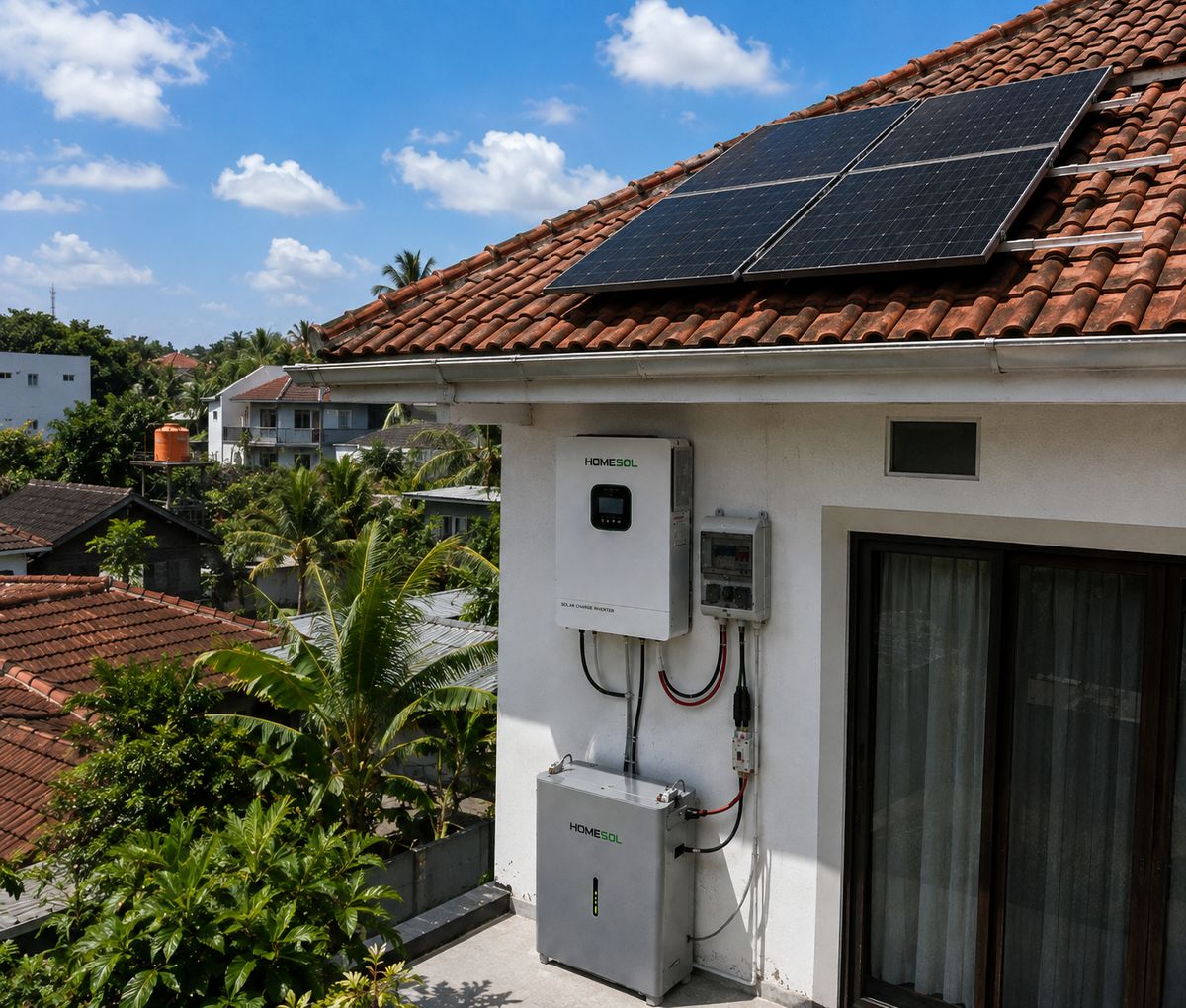
A hybrid inverter is designed to work with solar panels, the electrical grid and a battery system. In addition to converting PV power into AC electricity, it manages battery charging and discharging.
This makes hybrid systems suitable for markets where customers want both solar generation and backup power. Typical applications include homes, shops, small businesses and areas where the utility grid is unstable.
For HOMESOL, the NS families are hybrid inverter ranges and can connect to compatible batteries. This makes them relevant for distributors serving energy-storage and backup-power demand.
What Is a Grid-Tied Solar Inverter?
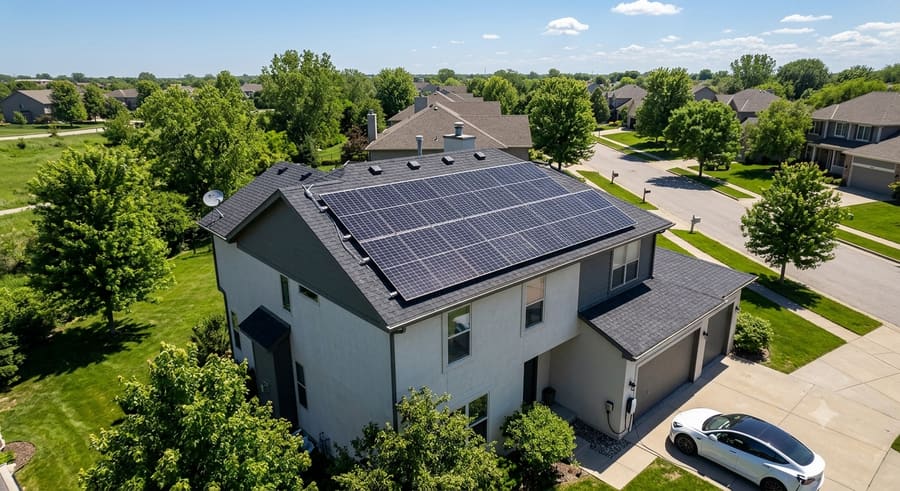
A grid-tied inverter is designed primarily to convert solar PV power into AC power for use with the utility grid. A pure grid-tied inverter is not intended to operate as a battery-storage inverter.
The system logic is straightforward:
For buyers whose main objective is daytime solar generation and reducing grid electricity use, this can provide a simpler system architecture.
HOMESOL's SOL 4.5K / 6.5K / 10K range is positioned as a pure grid-tied inverter family and does not connect to batteries.
Hybrid vs Grid-Tied: Key Differences
| Feature | Hybrid Inverter | Grid-Tied Inverter |
|---|---|---|
| Solar PV | Yes | Yes |
| Utility grid | Yes | Yes |
| Battery connection | Yes | No |
| Energy storage | Yes | No |
| Backup applications | Suitable | Not the primary purpose |
| System complexity | Higher | Lower |
| Typical buyer | Backup + solar customer | PV generation customer |
| Distributor sales approach | System solution | PV inverter product |
When Hybrid Inverters Make More Sense
Hybrid products normally make more sense when backup power is an important purchasing factor. In markets with frequent outages, installers often need an inverter that can work together with a battery.
Battery compatibility also gives distributors an opportunity to sell a complete system instead of one inverter alone:
HOMESOL's current battery range includes 25.6V and 51.2V LiFePO4 products, allowing distributors to build different storage configurations depending on inverter and project requirements.
When Grid-Tied Inverters Make More Sense
Not every solar customer needs a battery. Where the electricity grid is relatively stable and the main goal is solar generation during the day, a grid-tied solution may be more appropriate.
The HOMESOL SOL family covers 4.5kW, 6.5kW and 10kW power classes. It is intended for grid-tied applications without battery storage.
What Should a Distributor Stock?
There is no universal answer. The right inventory mix depends on the local market.
Strong backup demand?
Prioritize hybrid models where outages and battery storage are common buying factors.
Stable grid + rooftop PV?
Grid-tied models may be more suitable for customers focused on solar generation.
Mixed customer base?
Build a focused portfolio with both categories instead of stocking too many overlapping models.
Do Not Choose an Inverter Only by kW Rating
Power rating matters, but B2B buyers should also understand the operating mode. A 6kW hybrid inverter and a 6kW pure grid-tied inverter are not interchangeable products simply because their power ratings are similar.
When a customer asks for a “6kW solar inverter,” first ask: Do you need battery backup, or will the system operate only with solar and the utility grid?
A Better Stocking Strategy for B2B Buyers
For a new distributor, it is usually safer to begin with a focused number of models instead of importing every available power class. Start with the power ranges most frequently requested in the local market, then separate demand into two groups:
- Battery-storage projects: match with hybrid inverter solutions.
- PV-only grid projects: match with grid-tied inverter solutions.
After several months of real sales data, increase inventory in the models with the highest turnover. This reduces unnecessary stock and gives the sales team a clearer product structure.
What About Three-Phase Applications?
Larger commercial projects may require a different inverter category. HOMESOL's NSP series is a three-phase inverter range aimed mainly at the U.S. market.
For this segment, distributors should confirm the required phase, voltage, project application and quantity before ordering instead of treating it as the same product category as standard residential hybrid or grid-tied models.
Questions to Ask Before Placing a Bulk Order
- Is the target application residential, commercial or project-based?
- Do customers require battery backup?
- What inverter power ranges sell most frequently?
- What battery voltage and capacity are normally required?
- Does the market need single-phase, U.S. 120/240Vac split-phase, or another grid configuration?
- What quantity is realistic for the first order?
- Is OEM or private-label packaging required?
Hybrid and Grid-Tied Inverters Serve Different Markets
Hybrid inverters and grid-tied inverters should not be viewed as competing versions of the same product. They solve different energy problems.
Compare current HOMESOL ranges: review the NS 8.2K / 10.2K hybrid inverter and SOLP 4.5K / 6.5K / 10K grid-tied inverter for model-specific battery and grid configuration differences.
Looking for wholesale solar inverters?
Tell us your target country, required power range, buyer type and estimated quantity. HOMESOL can help match the appropriate inverter range for your market.