How to Size a Solar Inverter: Complete Guide for 2026
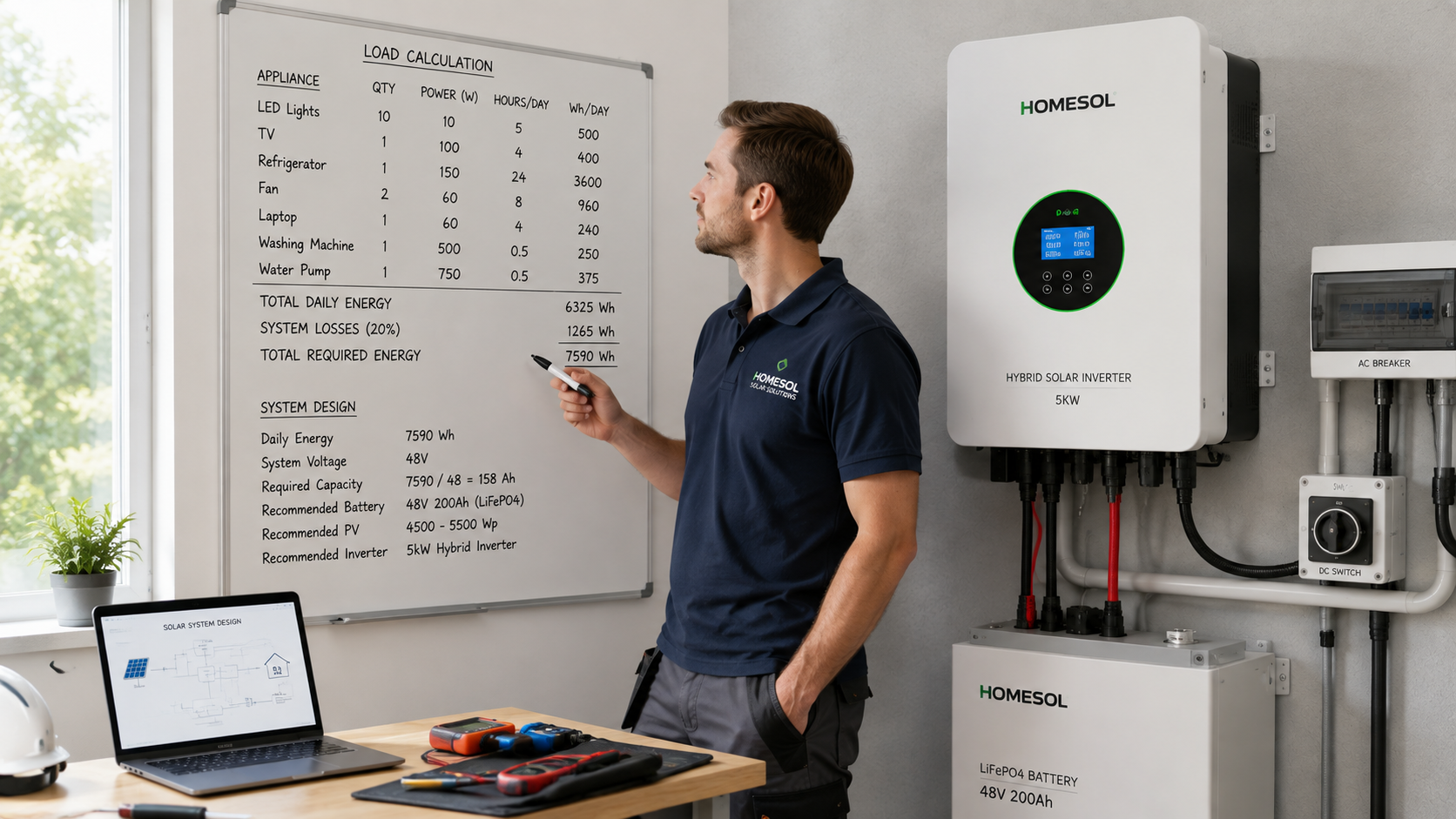
Choosing the right solar inverter size is critical for system performance. An undersized inverter will shut down under load, while an oversized one wastes money. This step-by-step guide walks you through exactly how to size a solar inverter for residential and commercial applications.
Step 1: Calculate Your Total Load
| Appliance | Wattage | Daily Usage |
|---|---|---|
| Air Conditioner (1.5HP) | 1,200W | 8 hours |
| Refrigerator | 150W | 24 hours |
| LED TV (55") | 100W | 5 hours |
| Washing Machine | 500W | 1 hour |
| Laptop + Phone | 100W | 6 hours |
| Lights (10 LEDs) | 50W | 6 hours |
| Total | 2,100W |
Step 2: Add Safety Margin
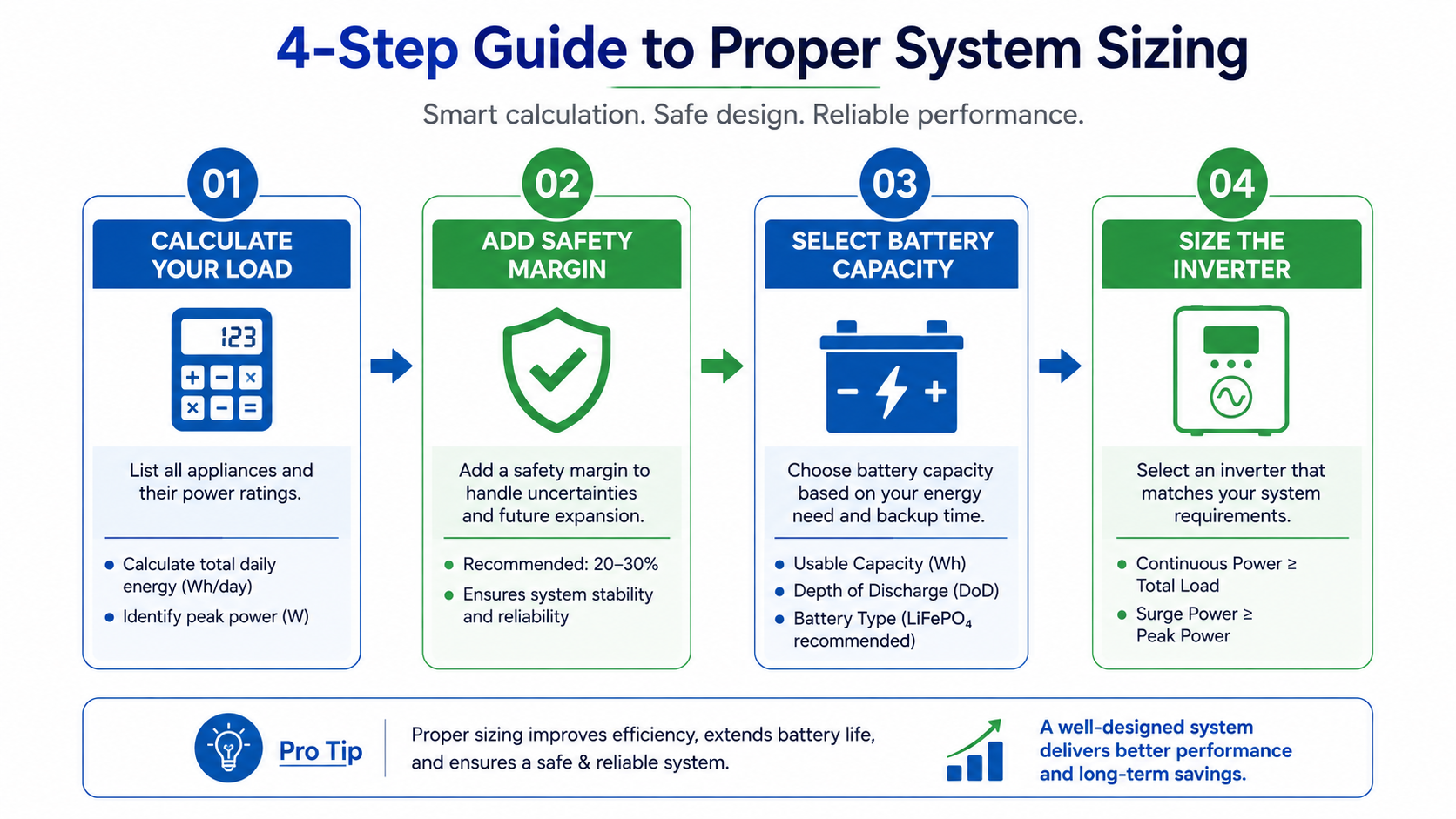
Always add 25% safety margin to handle startup surges (motors, compressors draw 2-3x rated power briefly).
For better headroom: choose 3.5kW or 4.2kW
Step 3: Match Battery Voltage to the Exact Inverter
| HOMESOL Model | Battery Voltage | Positioning |
|---|---|---|
| NS 2.5K | 24V | Compact hybrid |
| NS 3.5K | 24V | Residential hybrid |
| NS-4.2K | 24V | Residential hybrid |
| NS-6.2K and above | 48V | Higher-power hybrid |
Step 4: Calculate Solar Panel Capacity
Example for the household above:
- Daily consumption: 2,100W × 6h average = 12.6kWh
- Peak sun hours: 5 hours (tropical region)
- System efficiency: 85%
- Required PV: 12.6kWh ÷ 5h ÷ 0.85 = 2.96kW → 3kW solar panels
Step 5: Select Your Inverter
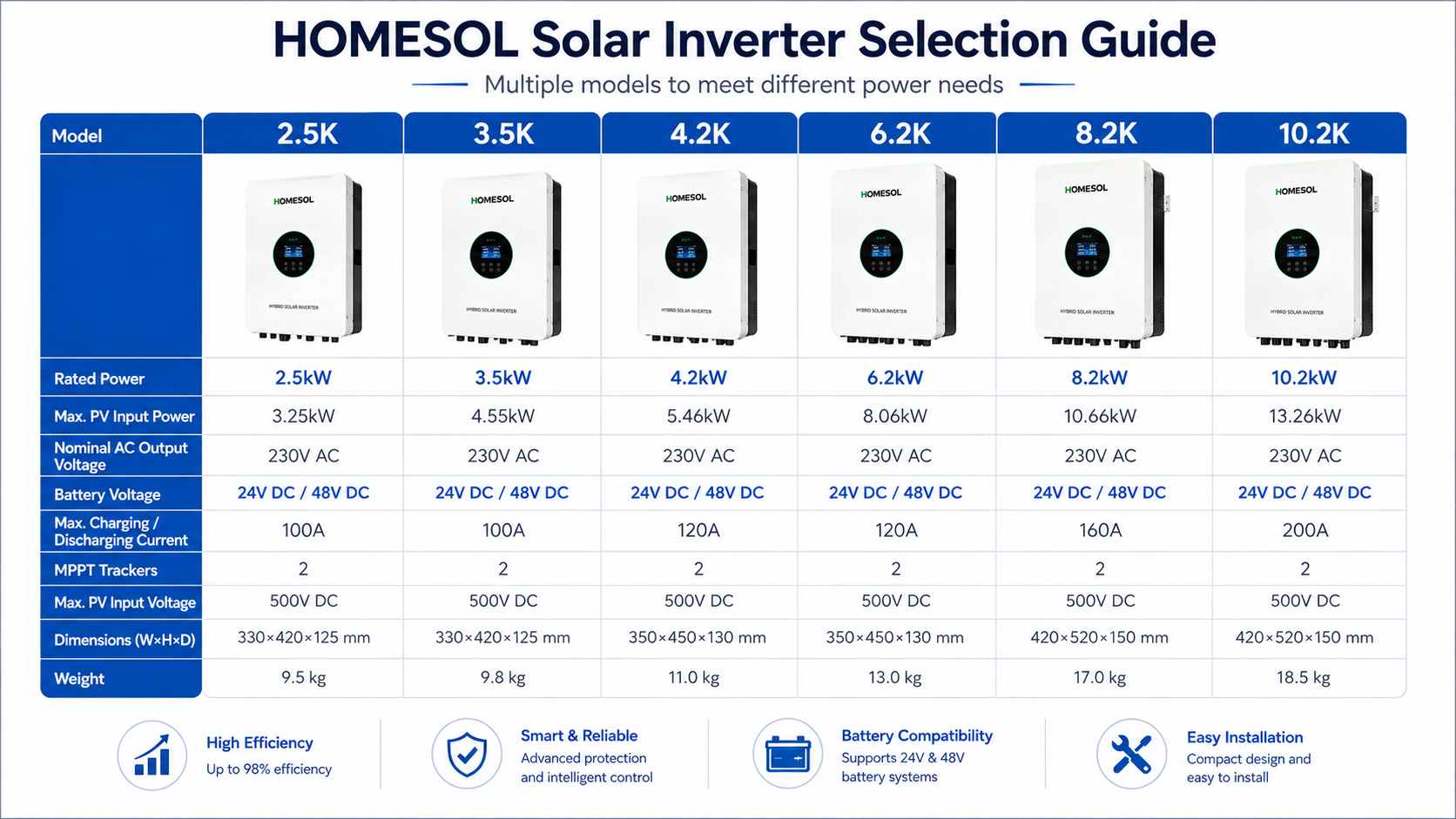
| Load Size | Inverter Model | PV Capacity | Battery Voltage |
|---|---|---|---|
| 1-2.5kW | NS-2.5K | Up to 4,000W | 24V |
| 2-3.5kW | NS-3.5K | Up to 6,000W | 24V |
| 3.5-4.2kW | NS-4.2K | Up to 6,200W | 24V |
| 4.2-6.2kW | NS-6.2K | Up to 8,000W | 48V |
| 6-10kW | NS-8.2K/10.2K | Up to 10,800W | 48V |
Common Mistakes to Avoid
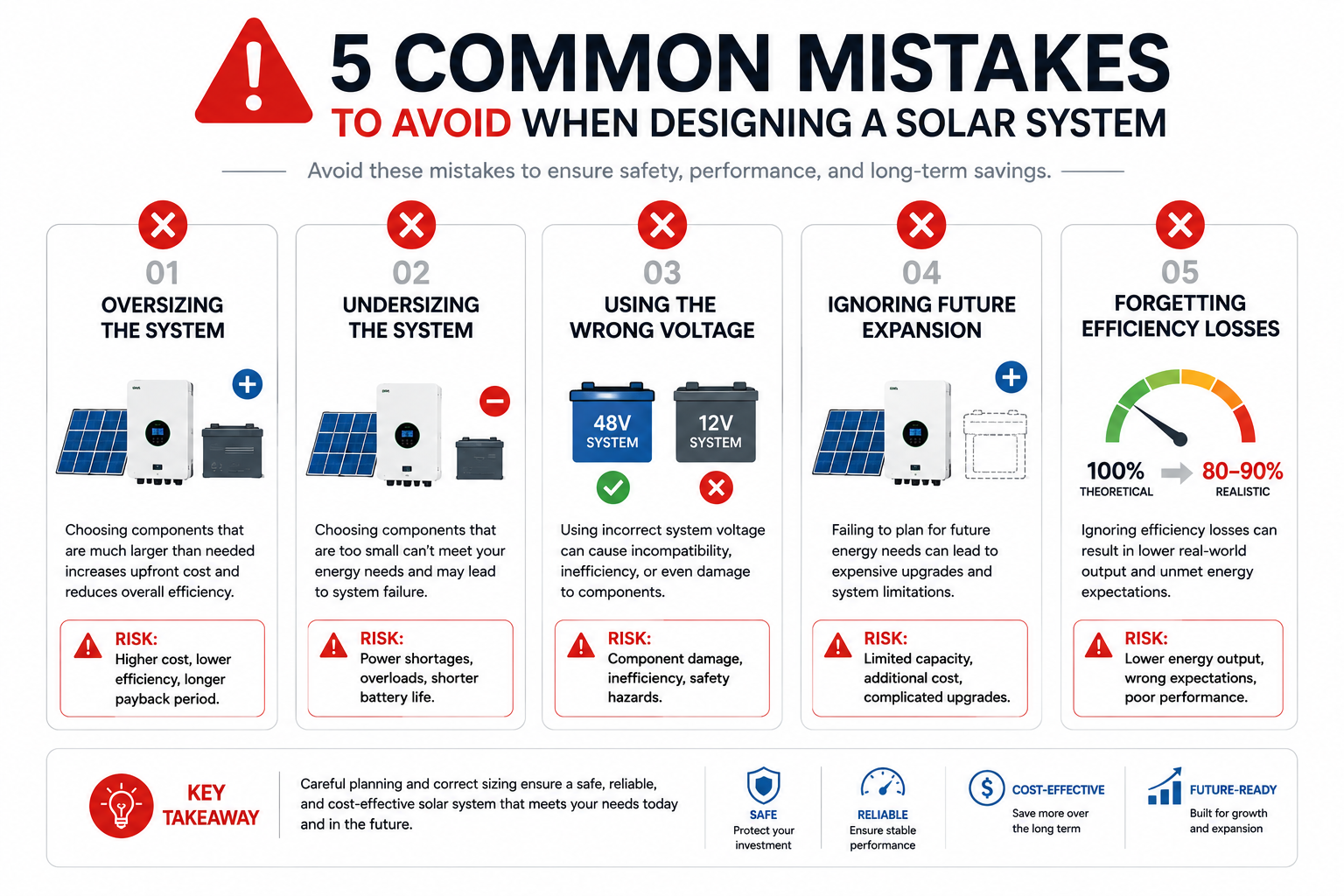
- Oversizing: Don't buy a 15kW inverter for a 3kW load — wasted money
- Undersizing: Don't ignore motor startup surges — inverter will shut down
- Wrong battery voltage: 12V systems above 3kW cause excessive cable losses
- Ignoring future expansion: Size for 20-30% above current needs
- Mixing efficiency definitions: use 92–94% for current HOMESOL inverter conversion efficiency; do not substitute MPPT tracker efficiency for conversion efficiency.
Model examples for sizing checks: review the NS 4.2K / 6.2K hybrid inverter and NS 8.2K / 10.2K hybrid inverter, then verify the exact battery voltage, PV limits and output requirements for the selected model.
Need product pricing or model selection support?
Explore HOMESOL inverter and LiFePO4 battery solutions, or send your target model, market and estimated quantity for a wholesale quotation.